





Eight markup macros
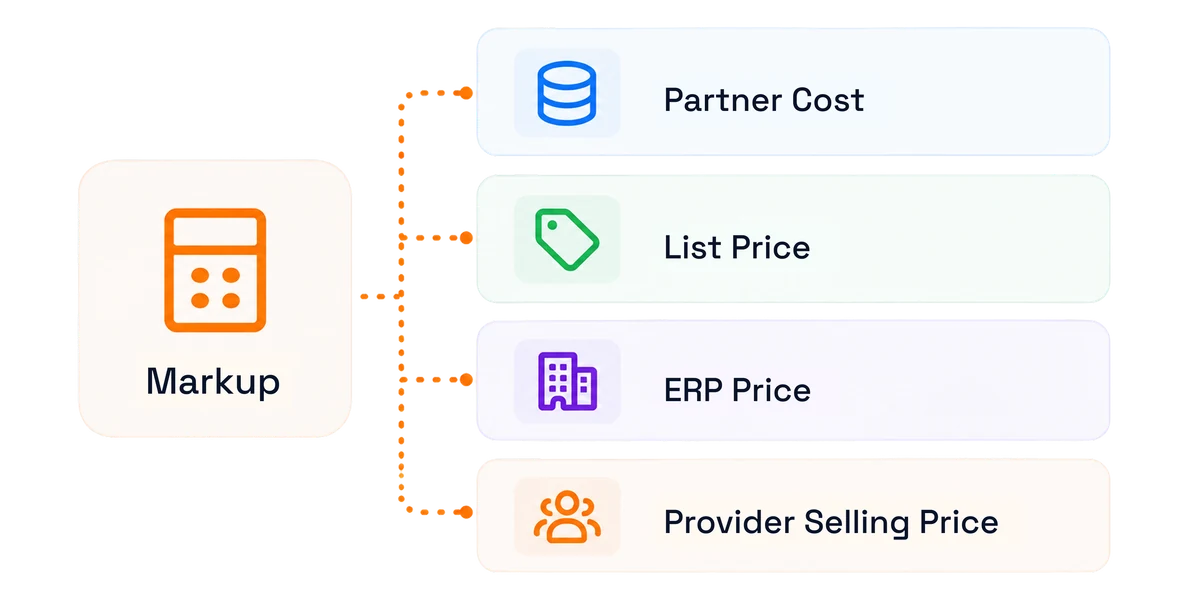
Price against partner cost, list price, ERP rates or the provider selling price. Set defaults by charge type and apply them across customer and reseller plans.
Set per-customer markups, plans, bundles, coupons, and quotes, and protect margin with approval workflows on every transaction.




Price against partner cost, list price, ERP rates or the provider selling price. Set defaults by charge type and apply them across customer and reseller plans.
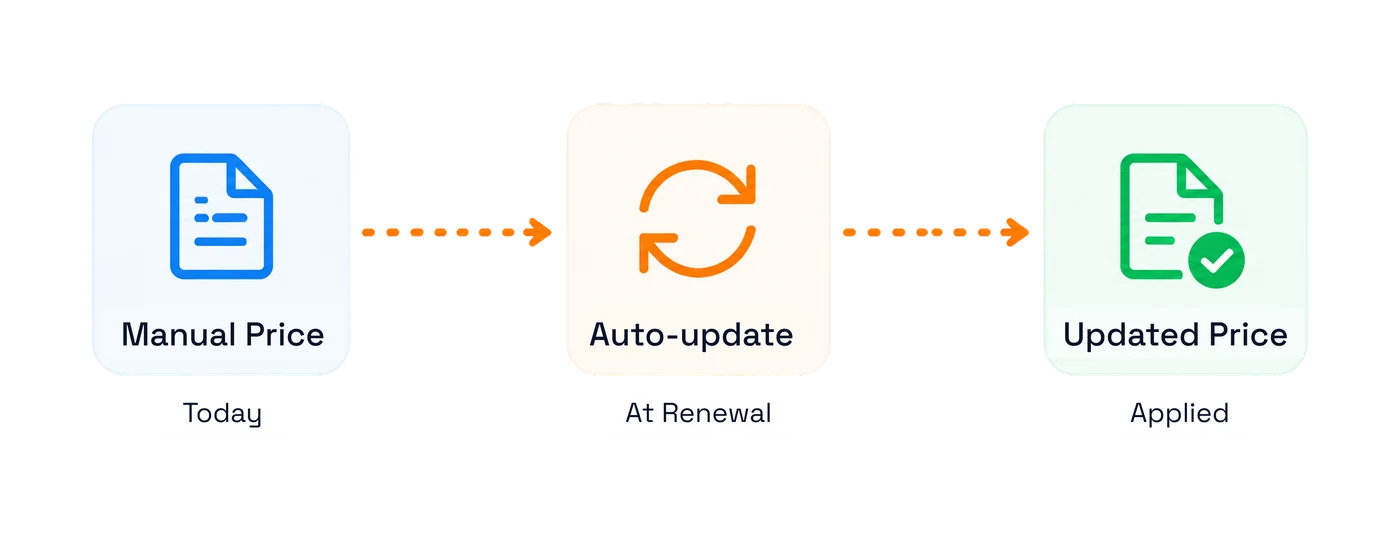
Manually priced subscriptions re-price automatically when they reach renewal. Microsoft pricing imports monthly through Partner Center, and plans can sync with your ERP.
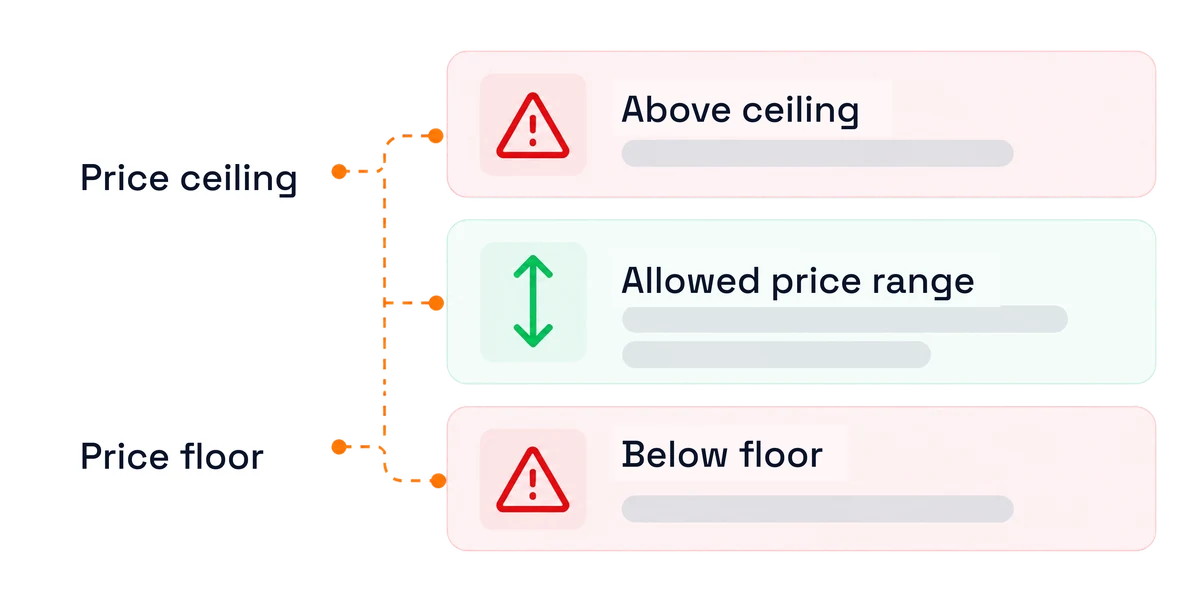
Block any sale price that falls below partner cost or exceeds provider pricing. Seat and credit limits sit alongside them, and anything above your threshold routes to you.
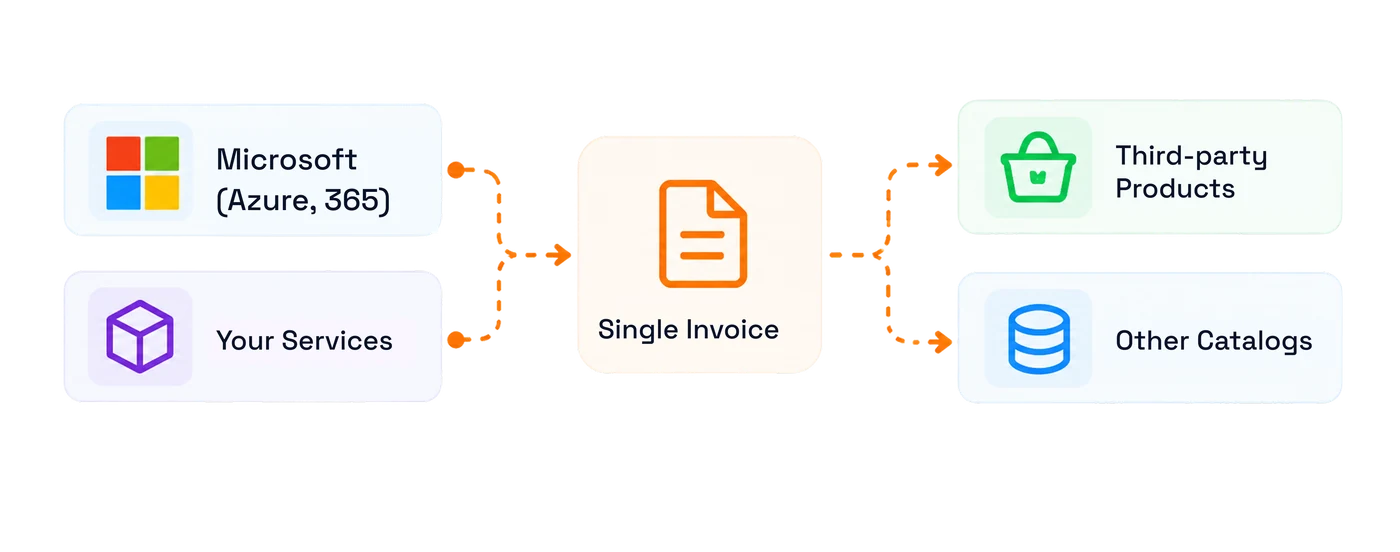
Bill your own services, third-party products and metered usage in one engine. Bundle Microsoft and partner offers into one named product and one price.
Create as many customer plans as your segmentation requires, with no ceiling on plan count.
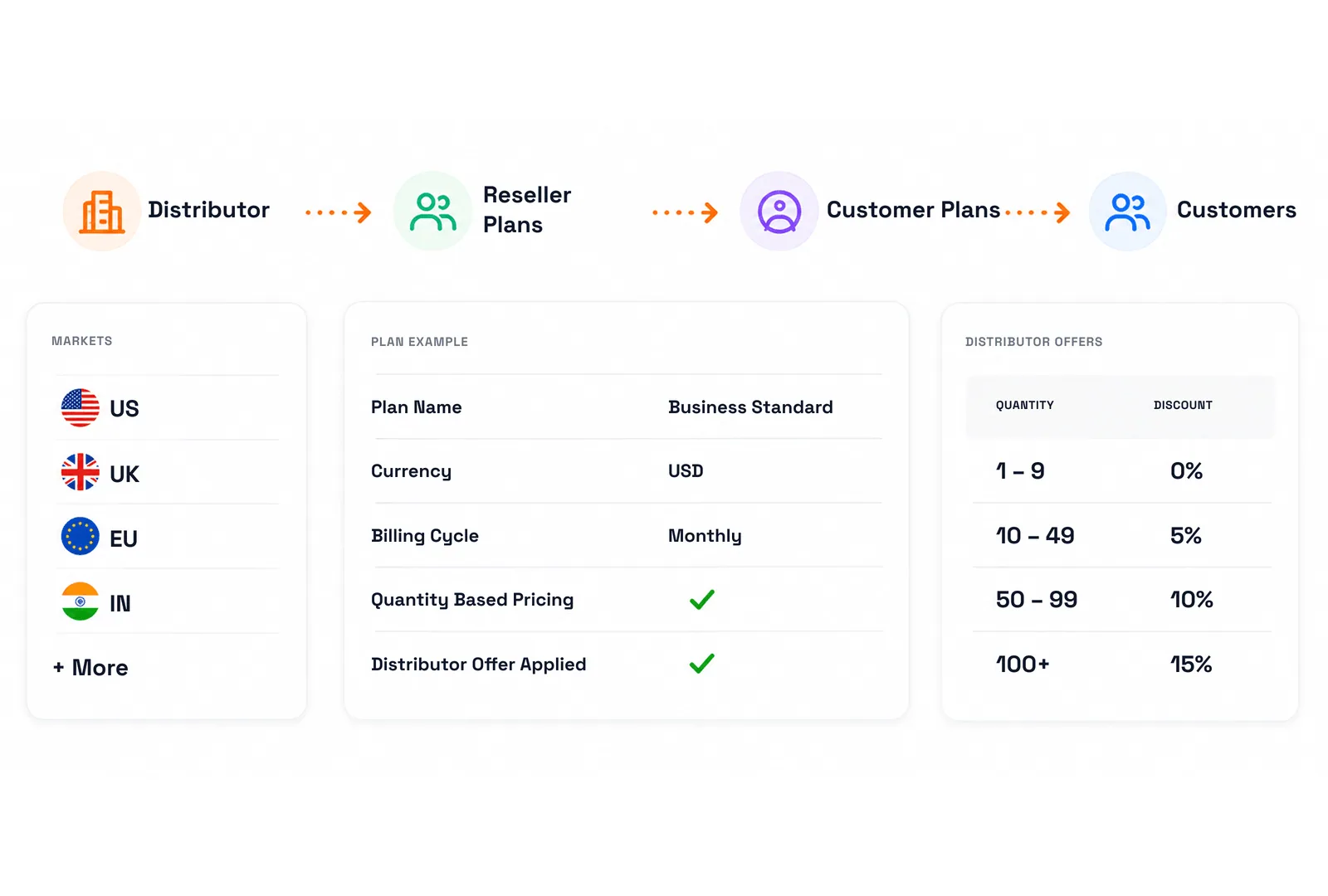
Run reseller plans in several Microsoft markets from one governed structure.
Distributors publish quantity-based offers into reseller plans, so the whole channel prices from one structure.
Set the display currency on each plan, so every customer sees the price in their own.
Illustrative figures: 14 customer plans, 6 reseller plans across 3 markets.
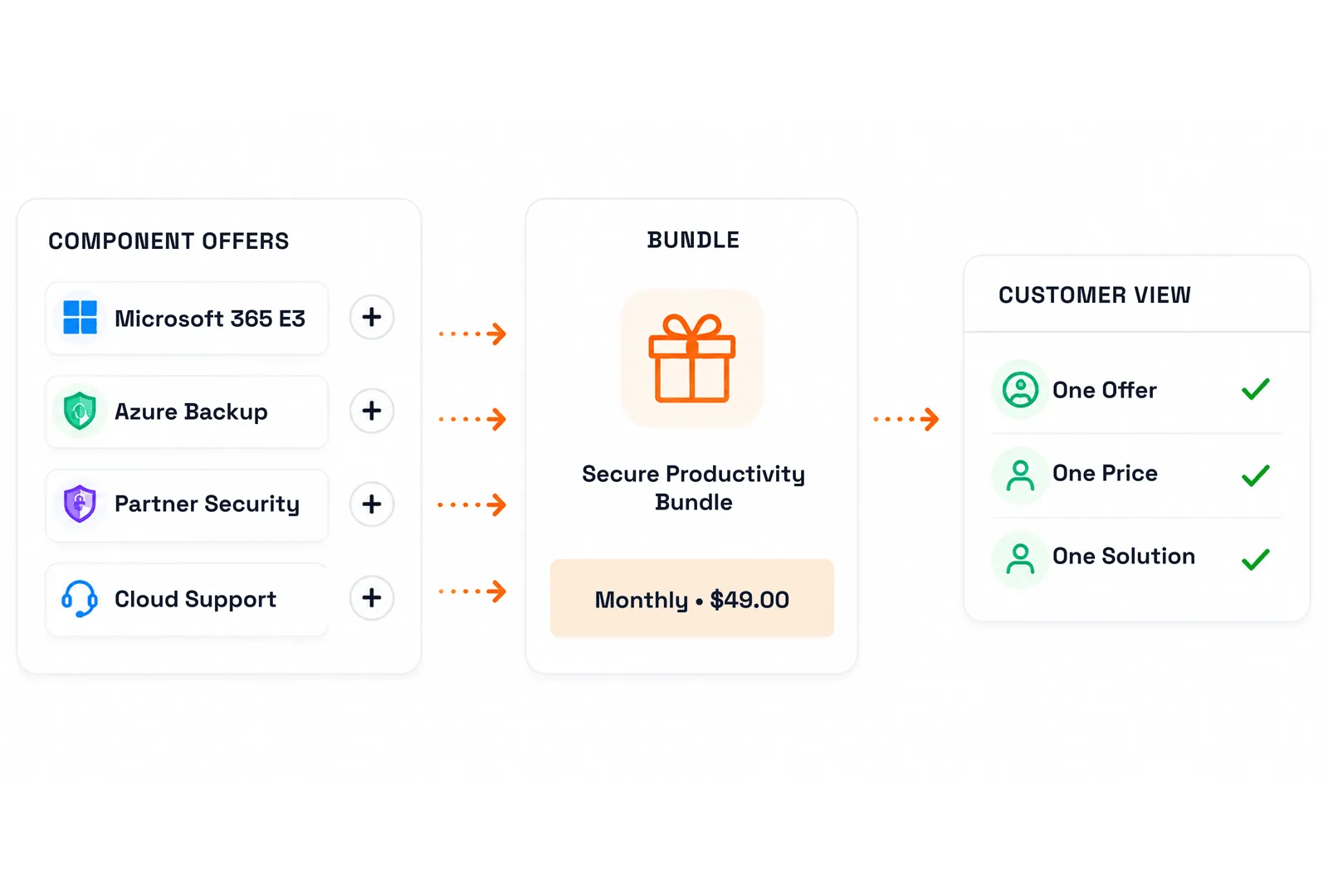
The customer sees a single clean offer and price, not the components inside it.
Combine Microsoft licenses with your own managed services in the same bundle.
A bundle carries its own name, billing cycle and sale price, independent of its parts.
Far easier to sell than a list of line items, and your component costs stay yours.
Illustrative bundle: Secure Modern Workplace — $64 / seat, billed monthly.
Microsoft pricing is imported every month through the Partner Center APIs.
Manually priced subscriptions update themselves at renewal, and can sync with ERP pricing.
Add new Microsoft SKUs to every plan at once, with real-time status tracking.
Search, filter and export current offer pricing whenever you need it.
Illustrative status: monthly import done, 128 new SKUs added, ERP in sync.
Your own services, third-party products, metered consumption, contracts, promotions, quotes and webhooks, all in the same engine.
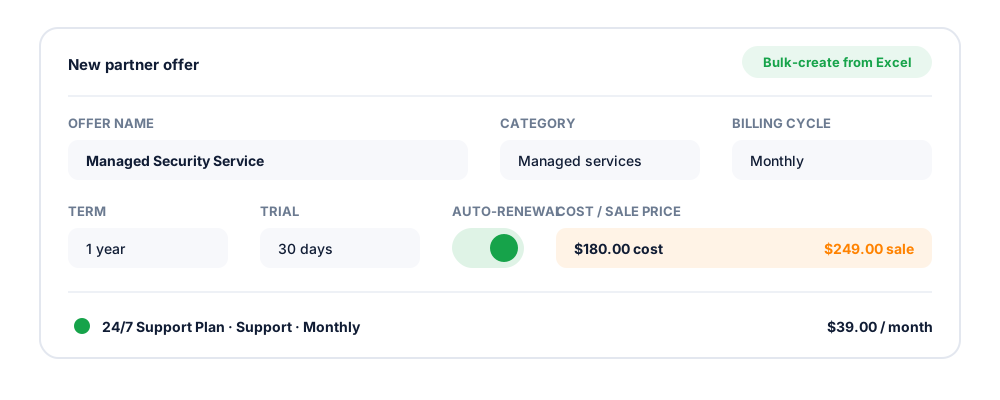
Create partner offers for managed services, support plans, professional services, and non-Microsoft products with custom categories, billing cycles, terms, auto-renewal, trial periods, and pricing. Bulk-create offers from Excel.
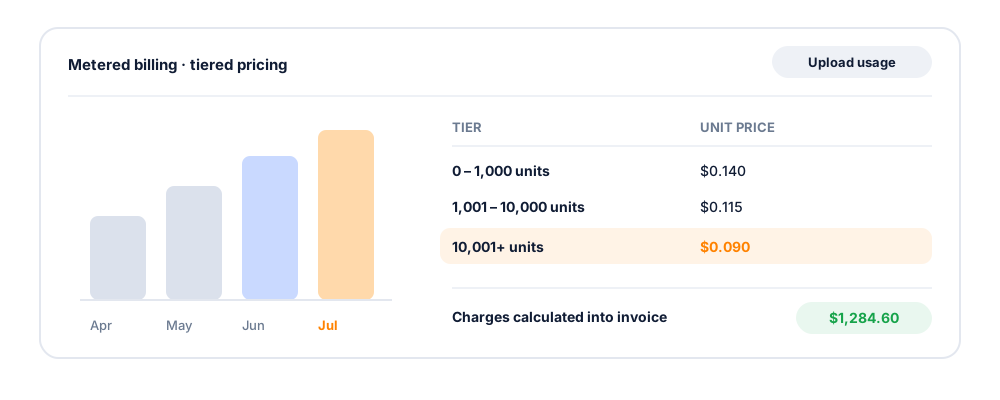
Bill consumption-based services with metered billing and tiered pricing. Upload usage on your schedule, and automatically calculate charges into invoices.
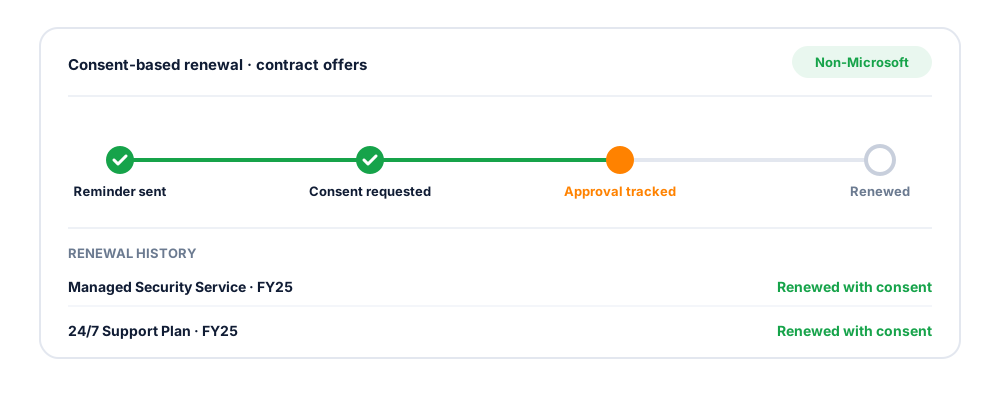
Run consent-based renewals for non-Microsoft offers with reminders, approval tracking, and complete renewal history.
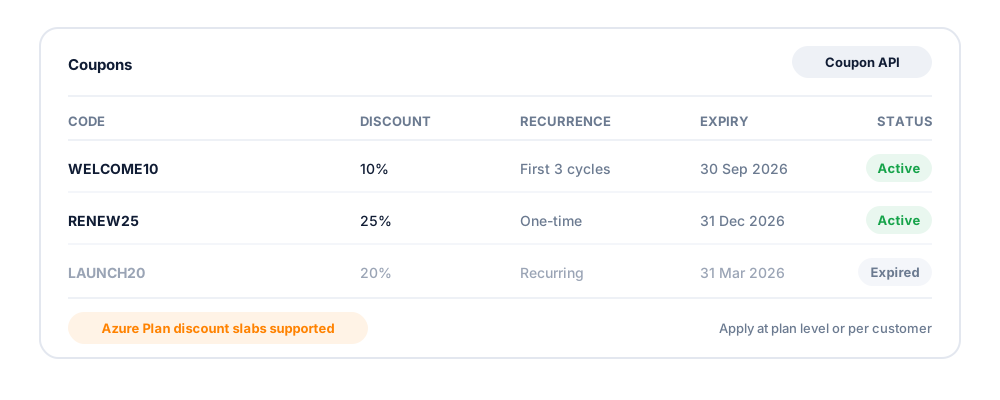
Create coupons with discounts, recurrence, expiry dates, and validity windows. Apply them to plans or customers, track status, access them through the Coupon API, and support Azure Plan discount slabs.
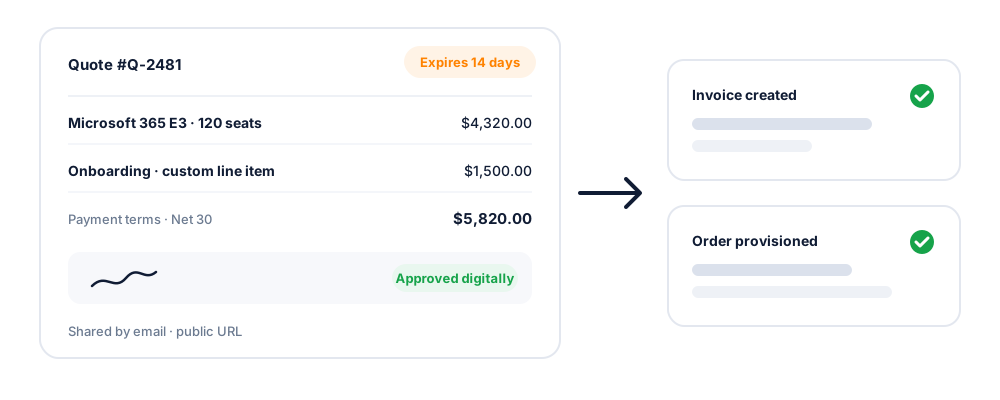
Create detailed quotes with plan offers or custom line items, payment terms, expiry dates, and digital approval. Share by email or URL, then automatically convert them into invoices and provisioned orders.
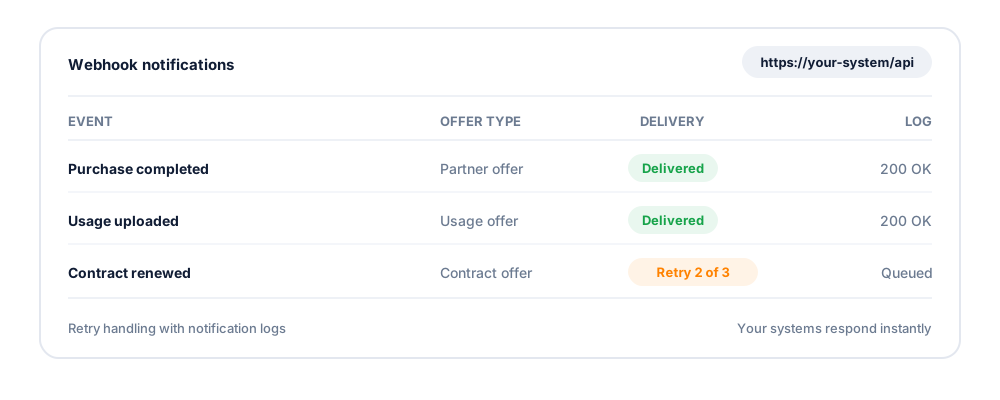
Create webhooks for partner, usage, and contract offers with retry handling and notification logs, so your systems respond instantly to purchases, changes, and renewals.
A transaction passes four gates before it becomes an order. Anything outside your rules stops here.
A proposed sale price under partner cost is rejected before it can become an order.
Ceilings prevent a price from exceeding the provider's own pricing.
The rule lives on the plan, so it applies to every transaction priced from it.
Illustrative check: $18.20 / seat proposed against $19.60 partner cost — blocked.
Apply a seat or credit limit to a whole plan, or to one customer on it.
The customer sees how much of their limit remains before they place the order.
Cap the number of seats and the outstanding credit independently.
Illustrative figures: 412 of 500 seats used, $6,140 remaining of a $25,000 credit limit.
Transactions above the threshold you set are held and routed for review.
Work through pending items one at a time, or clear them with approve-all.
Every approval and rejection is recorded in full.
Illustrative queue: one 40-seat E5 order approved, one above-threshold order pending.
Convert the price into each customer's currency, customer by customer.
Market tax rules apply themselves rather than being added by hand.
The margin you set survives both the conversion and the tax treatment.
Illustrative example: USD → EUR with DE 19% VAT applied, margin held.
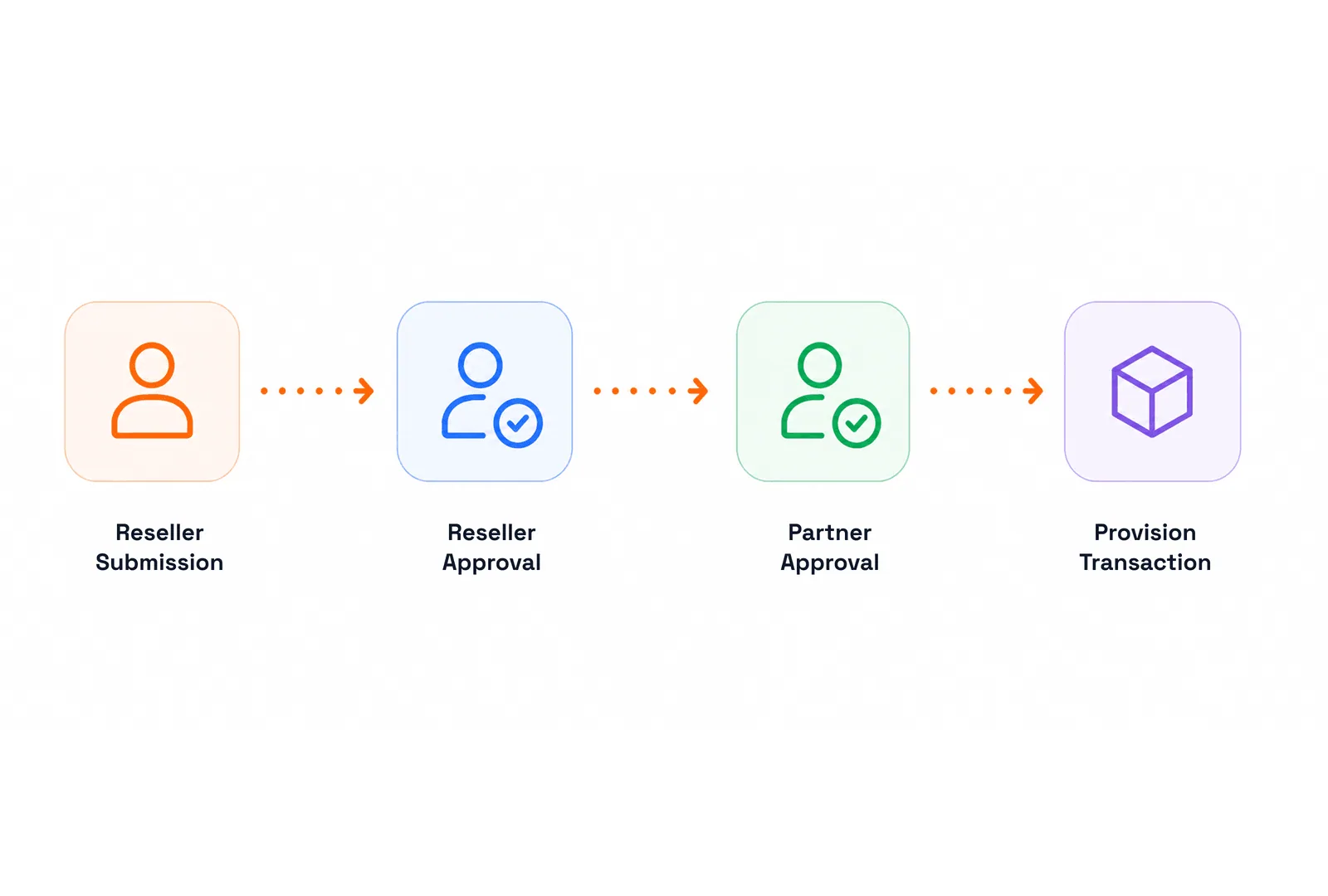
The reseller approves, then you approve, before anything reaches Microsoft.
Matches the distributor-to-reseller chain rather than a direct sale.
Nothing provisions until both approvals are on the record.
Illustrative sequence: reseller signed off, partner signed off, provisioning released.
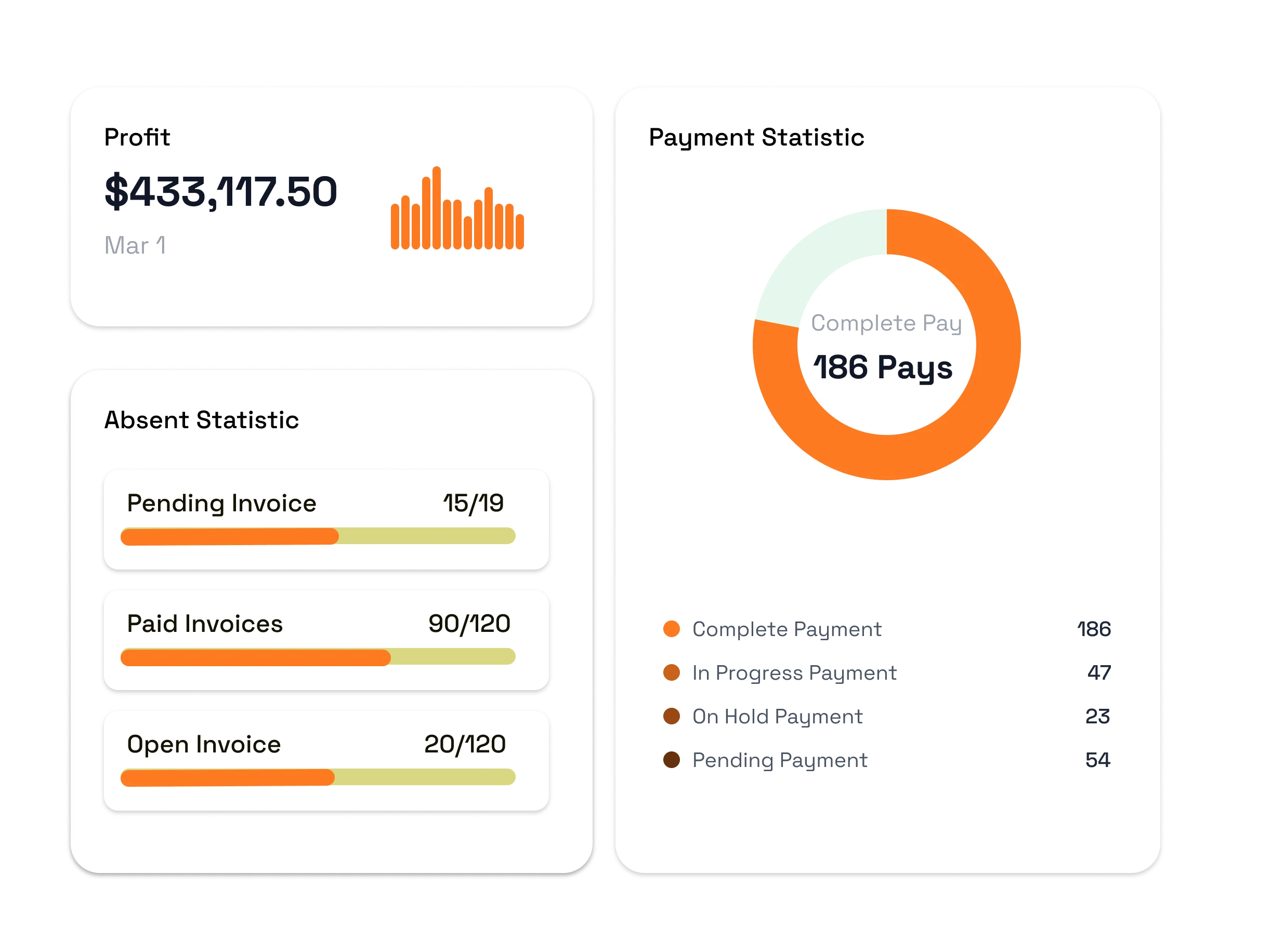
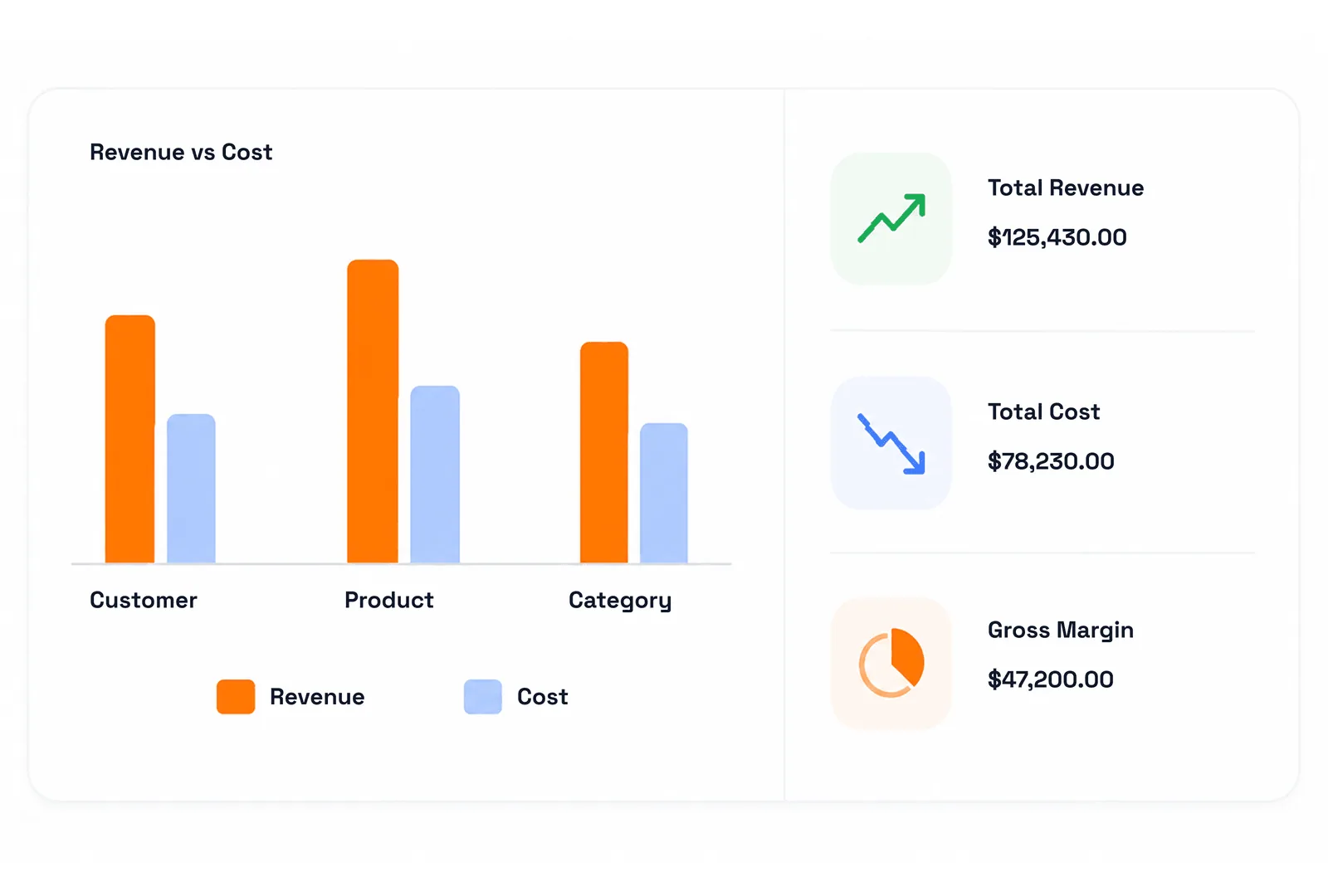
Compare what you charged against what it cost, across the whole book.
Slice margin three ways to find where it is actually being made or lost.
See the blended margin next to the target you set for it.
Illustrative figures: 31.4% blended margin against a 30% target — Microsoft licenses 62%, partner offers 24%, metered services 14%.
Through the channel
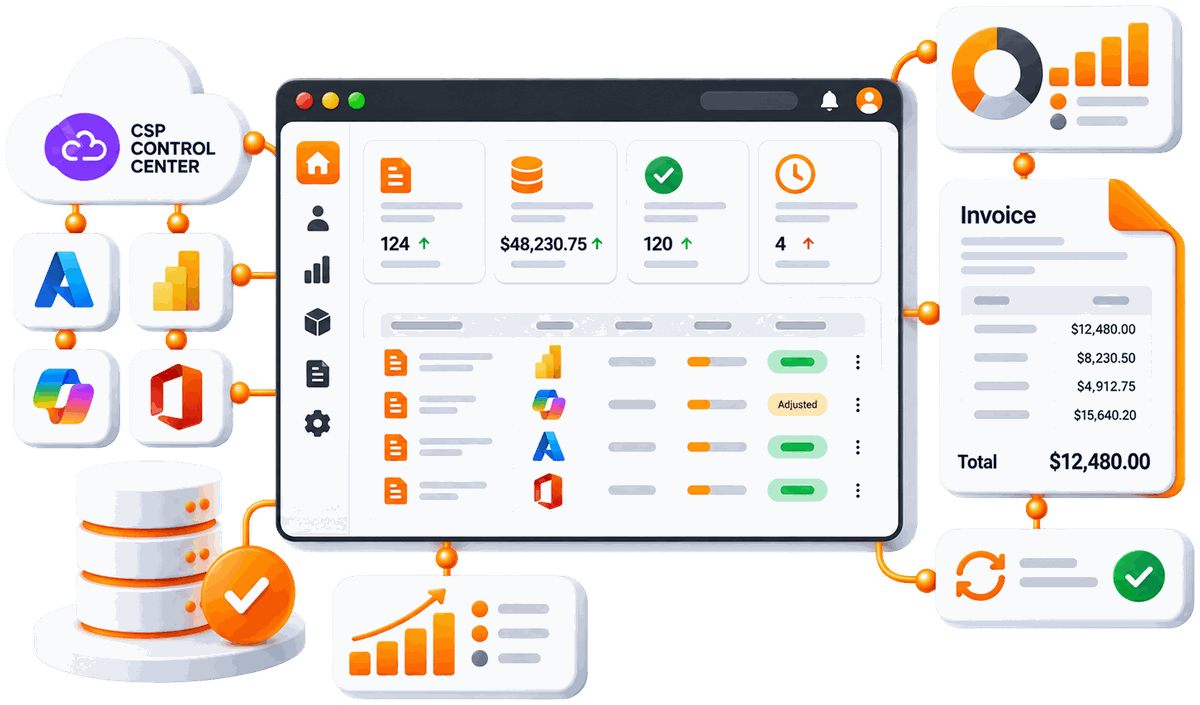
Pricing only matters once it reaches a customer. This is the path an offer takes — down the channel, into a bundle, through approval, and back to you as margin you can see.
Distributor offers feed reseller plans, which feed the customer plans your resellers sell. Each plan carries its own market, currency and billing cycle, with quantity-based pricing and distributor discounts applied as they flow down the tiers.
Combine Microsoft licenses, your own services and partner products into a single bundle at one price. The customer sees one offer, one price and one solution instead of four line items they have to reason about themselves.
A reseller submits an order, the reseller approves it, the partner approves it, and only then does the transaction provision. Orders that need a second pair of eyes get them, without anybody policing a shared inbox.
Revenue against cost by customer, product and category, resolving to total revenue, total cost and gross margin. The pricing rules you set at the top of this page end here, as a number you can act on.
Outcomes
Target margin becomes an enforced rule, every price traces to a cost, and sales stops asking for exceptions.
| Price setting & maintenance | Spreadsheet process | With CSP Control Center |
|---|---|---|
| Setting a sale price | Typed per deal, per person | Applied by macro across the plan |
| Microsoft price changes | Manual re-entry, often skipped | Imported monthly, applied at renewal |
| Discounts | Agreed by email, untracked | Coupons with expiry, recurrence and status |
| Margin protection & conversion | Spreadsheet process | With CSP Control Center |
|---|---|---|
| Below-cost deals | Discovered after signature | Blocked by a plan-level price floor |
| Non-Microsoft revenue | Invoiced separately, or missed | Partner offers billed in the same engine |
| Quote to order | Re-keyed into billing | Approved quote converts automatically |
Spreadsheet pricing Markups typed per deal, Microsoft price changes re-entered by hand, and discounts agreed over email with no expiry. Below-cost deals surface after signature, non-Microsoft revenue is invoiced somewhere else, and every approved quote is re-keyed into billing. | CSP Control Center Eight markup macros applied across unlimited customer and reseller plans, price floors and ceilings enforced at plan level, coupons with expiry and status, partner and metered offers billed in the same engine, and approved quotes converting straight into invoices and provisioned orders. |

CSP Business Owner
Target margin, enforced
Target margin becomes an enforced rule rather than an aspiration, and bundles, partner offers and metered services open revenue that Microsoft licenses alone do not.

Finance & Billing Manager
Every price traces to a rule
Every sale price traces to a rule and a cost, discounts have an expiry, and profitability reporting reconciles to the pricing you configured.

Operations Manager
No pricing exceptions
Sales can quote and close without a pricing exception request, because the rules are already inside the plan.
Full control. Set sale prices using eight markup macros, against partner price, list price, provider selling price, markup, ERP percentage or a target margin, build unlimited customer and reseller plans, enforce price floors and ceilings, and gate changes with approval workflows so margin is protected on every transaction.
A markup macro adds a percentage on top of your cost; a margin macro prices so that a set percentage of the sale price is profit. The two produce different numbers from the same input, and CSP Control Center supports both explicitly so your pricing matches how your finance team reports profitability.
Yes. Plan-level sale price controls prevent prices below partner cost and can restrict prices exceeding provider pricing. Approval workflows and seat, credit and transaction limits gate anything above your thresholds.
Yes. Partner offers let you list and bill your own services and third-party products with their own categories, billing cycles, term durations, trials, and cost and sale pricing, alongside Microsoft offers and inside bundles. Metered billing supports usage-based services with tiered pricing.
Yes. Bundles combine multiple Microsoft and partner offers into a single composite offer with one name, billing cycle and price. Customers see only the bundle, not the components.
Create coupons with a discount percentage, recurrence, expiry and validity window, then apply them at plan level or assign them to specific customers. Coupons are searchable by code, trackable by status, available through the coupon API, and support consumption-based discount slabs on Azure Plans.
Yes. Monthly Microsoft pricing imports through Partner Center APIs, manually priced subscriptions can update automatically at renewal, and new SKUs can be added to all plans in a single action.
Yes. Quotes are built from plan offers or custom line items, shared by email or public URL with default terms and a signature block, digitally approved, and converted automatically into an invoice and a provisioned order.